
What Is a Pterygium?
Pterygium is a noncancerous growth that can extend from the white of the eye onto the cornea and affect vision.
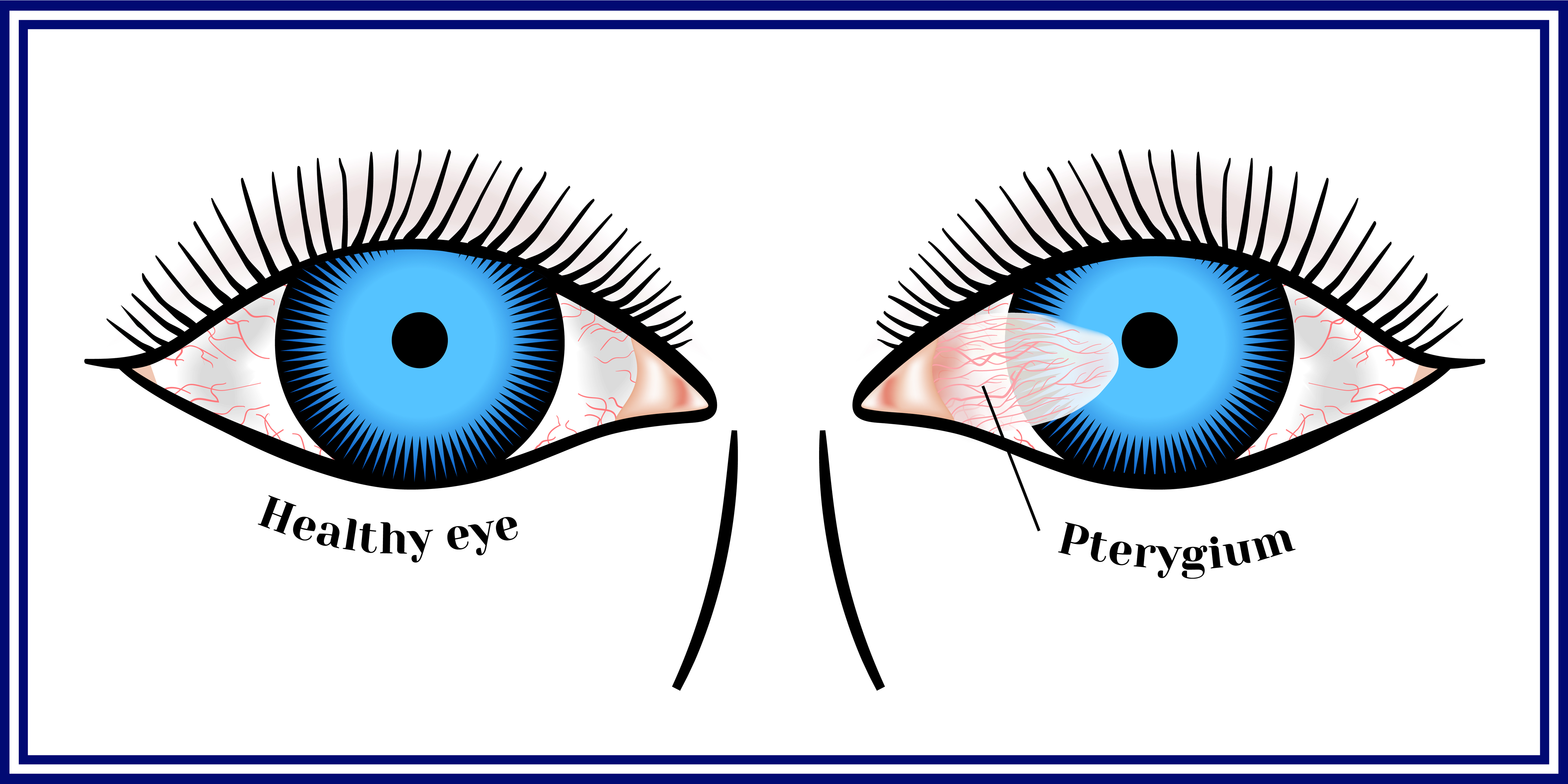
Pterygium is a noncancerous growth that looks like a raised white/pink tissue on the white of one or both eyes. It is often referred to as ‘surfer’s eye’ because it tends to affect people who have chronic UV light and wind exposure.
While not typically a serious condition, pterygium can continue to grow until it covers the cornea, leading to distortion of the cornea (astigmatism) and blurred vision.
What Are the Symptoms of Pterygium?
Pterygium symptoms include:
- Blurred vision
- Persistent redness
- Burning
- Itching
- Feeling of something foreign in the eye
- Visible fleshy, wing-shaped growth extending from the white part of the eye onto the cornea
What Causes a Pterygium?
There is no single known cause of pterygium. Several environmental and lifestyle factors can increase your risk of developing this common eye condition. Pterygium is most often associated with long-term exposure to ultraviolet (UV) light from the sun, making it more common among people who spend significant time outdoors.
- Prolonged exposure to UV rays from sunlight
- Frequent exposure to dust, wind, sand and other airborne irritants
- Chronic dry eye symptoms
- Not wearing UV-protective sunglasses or a wide-brimmed hat outdoors
- Living or working in dry, low-humidity environments
Who Is More Likely to Develop It?
- Adults ages 20–40
- More frequently seen in men
- Higher risk in sunny climates
Pterygium most commonly affects adults between the ages of 20 and 40 and tends to occur more frequently in men. Individuals living in sunny climates or regions with high UV exposure may face a greater risk of developing pterygium.
How Is Pterygium Treated?
01
Relieve Irritation
Medicated or lubricating eye drops can help ease irritation caused by pterygium.
02
Remove the Growth
Pterygium surgery to remove the growth may be recommended if the lesion begins to threaten your sight or is a personal cosmetic issue.
03
Reduce Recurrence Risk
To reduce the risk of recurrence after surgery a conjunctival autograft or an amniotic membrane transplant (AMT) graft may be placed where the former pterygium was located.
If you are experiencing the symptoms of pterygium, contact us today to schedule an eye exam.